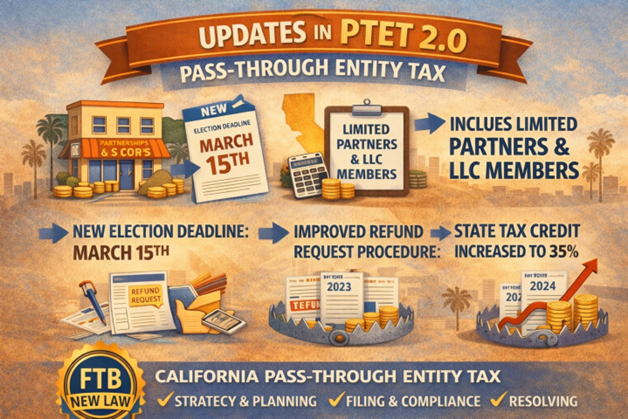
In California, an S-corp or partnership owner had a deadline of the end of 2025. The tax on Pass-Through Entities Tax (PTET) was about to expire, and it would drag a huge tax savings plan along with it. However, with the help of the Senate Bill 132 (SB 132), which became law in June 2025, the program has been brought back to life.
Welcome to PTET 2.0. This extension now extends the election to taxable years prior to January 1, 2031. To the business owners, this is not only an improved renewal but a much better workaround that will still allow you to save potentially tens of thousands of dollars each year simply because it avoids the federal SALT deduction cap. Whenever you are facing trouble, you should look for an experienced professional (like a tax consultant lawyer) for guidance.
Explanation of the Workaround
You must know the problem to which this extension is so important. The federal Tax Cuts and Jobs Act limits the deduction you can make on personal tax returns on State and Local Tax (SALT). Although this cap was to rise to $40,000 by 2025, high earners are subject to phase-outs, and a significant number of California business owners pay much more than this in state taxes.
The PTET flips the script. The 9.3% tax is estimated at the entity level, but is not imposed on you as an individual, but on your business. This is reported as a deductible business expense on your federal filing, reducing your pass-through income. You shall get a dollar-to-dollar credit on your California return. It converts a non-deductible personal expense to a deductible business expense.
What is New About PTET 2.0?
SB 132 does not simply push the date back; it puts a major safety net in place that a trip is planned.
The Haircut Rule
In former times, gaps in the prepayment due on June 15 were fatal to you. The election can be made even in case of missing the payment in tax years 2026-2030. However, the credits of your owners will be cut in 12.5% of the sum that would have been paid (haircut). Hiring an experienced tax professional (like Santa Monica tax attorneys) will surely help you in the long-run.

- Payment Schedule
You still should pay the higher of 50% of the previous year’s tax or 1000 by June 15 of the present year to receive the full credit. The outstanding return is offset by the original date of return.
Here are Some Strategic Tips to Maximize PTET
To ensure you enjoy the full benefits of this extension, the following are some tips for action that can be taken:
Make June 15 a Tax Deadline
Do not be misled by the new haircut rule. You are not going to be disqualified, but losing 12.5% of the credit on shortage is a costly oops. You can now schedule a reminder on your calendar to approximate and make the June installment.
Run the Numbers vs. New SALT Cap
When the federal SALT cap increases to 40000 and soon switches to phase out (high income), the PTET is no longer automatic for all. Run a projection. Suppose you have state income taxes amounting to 40,000 to the dot, the personal deduction could cover that. However, at $70,000 in CA tax, the PTET becomes a no-brainer as well.
Cash Flow Planning
PTET payment removes cash from your business. Assuming you have a variable income business (such as real estate or construction), then you must plan out this mid-year cash bomb to avoid liquidity crunches. The California business owners can be given long-term security with the extension of the PTET until 2031. It is still one of the most effective ways of decreasing your federal taxable income. It is, however, more necessary than ever with the development of the 12.5% penalty against underpayment. Do not include this on your to-do list until tax