Guest posting can help a business reach relevant readers and earn attention beyond its own website. But arranging placements takes more than finding a publisher willing to accept an article. Buyers need to assess site quality, agree on costs, manage content and make sure the finished work matches expectations. Whether to hire a freelancer directly or use a marketplace affects how much of that process you manage yourself.
There is no single option that suits every campaign. A small business testing one placement may value personal contact, while a team coordinating several publishers may need a more structured way to track orders and payments. Understanding the trade-offs can help you choose a process that is practical, transparent and consistent with your editorial standards.
What a Freelancer Can Bring to a Campaign
Working directly with a freelancer gives you a close relationship with the person doing the work. You can discuss your audience, preferred tone and campaign goals without passing instructions through several layers. An experienced outreach specialist may also have established publisher contacts or be able to handle research, pitching and follow-up as one service.
This arrangement can be flexible. Scope and pricing are negotiated between the buyer and freelancer, and an ongoing relationship may make repeat work easier. Direct hiring can be especially useful when you have a detailed brief or need a specialist with knowledge of a particular sector.
The buyer, however, usually carries more responsibility for checking the freelancer’s claims and managing the transaction. You may need to confirm which sites are included, inspect recent articles, clarify whether writing and outreach are covered, and agree what happens if a publisher declines a pitch. If the work is paid for in stages, the payment terms and evidence of delivery should be clear before the campaign begins.
How a Marketplace Changes the Process
A marketplace places service listings, communication and payment within a shared system. Depending on the platform, buyers may be able to compare offers, review seller histories and keep order details in one place. This can make it easier to start with a defined package rather than negotiate every part of a project from scratch.
That structure is helpful, but it does not remove the need for judgement. A listing may describe a service in broad terms, so buyers should ask what a placement includes and whether they can approve the proposed publisher before work proceeds. Reviews can offer context, but they are not a substitute for checking a site’s relevance, editorial quality and audience.
Marketplace rules also vary. Some services hold payment until an order is approved, while others have different release, cancellation or dispute procedures. Before placing an order, read the terms and make sure the platform’s process fits the risk and value of the work.
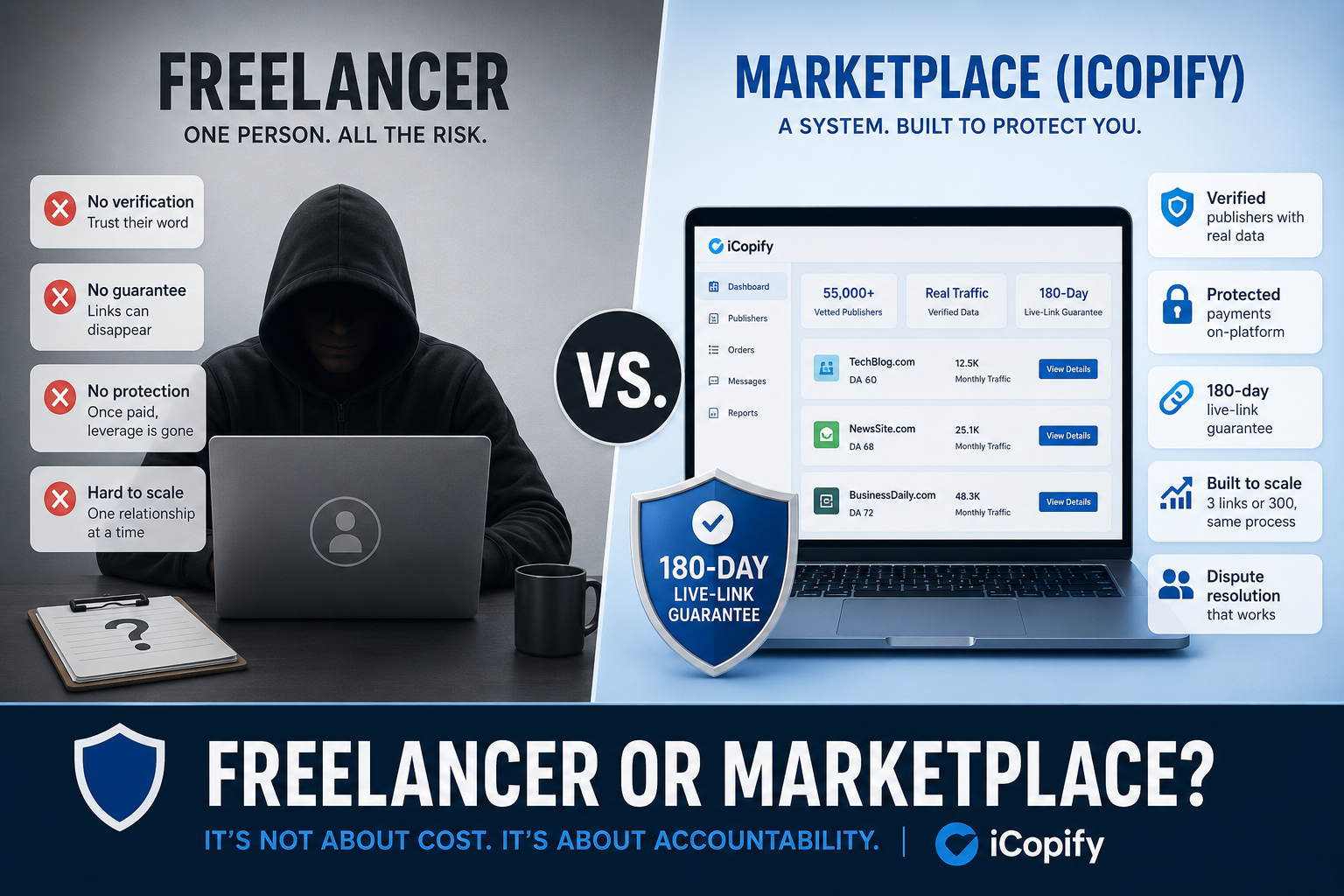
A useful overview of marketplace versus freelancer options can help buyers compare publisher vetting, pricing, payment protection, link guarantees and dispute resolution. These details matter because a low headline price may not reflect the full cost of revisions, replacement placements or time spent resolving problems.
What to Check Before Choosing
Publisher relevance and quality
Consider whether a site serves the audience you want to reach. Look at its recent content, editorial standards and topical focus, rather than relying on a single score or a promise of high traffic. A placement on a relevant publication may be more valuable than a link on a site with impressive-looking metrics but little connection to your subject.
Scope, timing and deliverables
Put the work in writing. Define who researches publishers, who writes the article, how many revisions are included, whether the link placement is subject to editorial approval and what counts as completion. Set a realistic timeline for pitching and publication; a publisher’s editorial schedule is not always under the seller’s control.
Payment and remedies
Agree when payment is due and what happens if agreed work cannot be delivered. If a placement is removed or differs materially from the brief, establish whether the remedy is a replacement, refund or another arrangement. A written record of decisions makes it easier to resolve misunderstandings, whether you hire directly or through a platform.
Search and reputation risks
Guest posts should offer genuine value to readers, not exist solely to manipulate rankings. Search engines may treat paid links differently from editorial recommendations, and businesses should follow applicable disclosure rules and link attributes. Avoid suppliers who promise guaranteed ranking gains or rely on mass-produced, unrelated placements. Protecting your brand and the quality of your website is more important than quickly accumulating links.
Choosing Tools for the Wider Workload
Guest posting is only one task that businesses may outsource. Teams often also need help with design, translation, development, video or marketing. When assessing alternatives to big freelance platforms, compare more than the number of categories available: consider how clearly offers are priced, how the platform handles payment, and whether its workflow suits the way you manage orders. For a broader comparison of services and fee models, see this guide to freelance websites. Osdire, for example, covers more than 900 service categories and uses flat pricing, with buyer payment held during an order and released after approval. Those features may be relevant for general freelance projects, though buyers should still assess each seller and service on its own merits.
Making the Decision
Choose a freelancer when expertise, direct collaboration and a tailored arrangement are your priorities—and you have time to manage checks and terms. Consider a marketplace when you value a defined ordering process, comparable offers and centralised communication, while remembering that platform protections depend on its specific rules.
Whichever route you take, begin with a small, clearly scoped project. Evaluate the quality of the communication, the relevance of the proposed publishers and the accuracy of delivery before expanding. A dependable guest-posting campaign is built on suitable editorial placements, transparent expectations and careful oversight, not simply on the number of links secured.