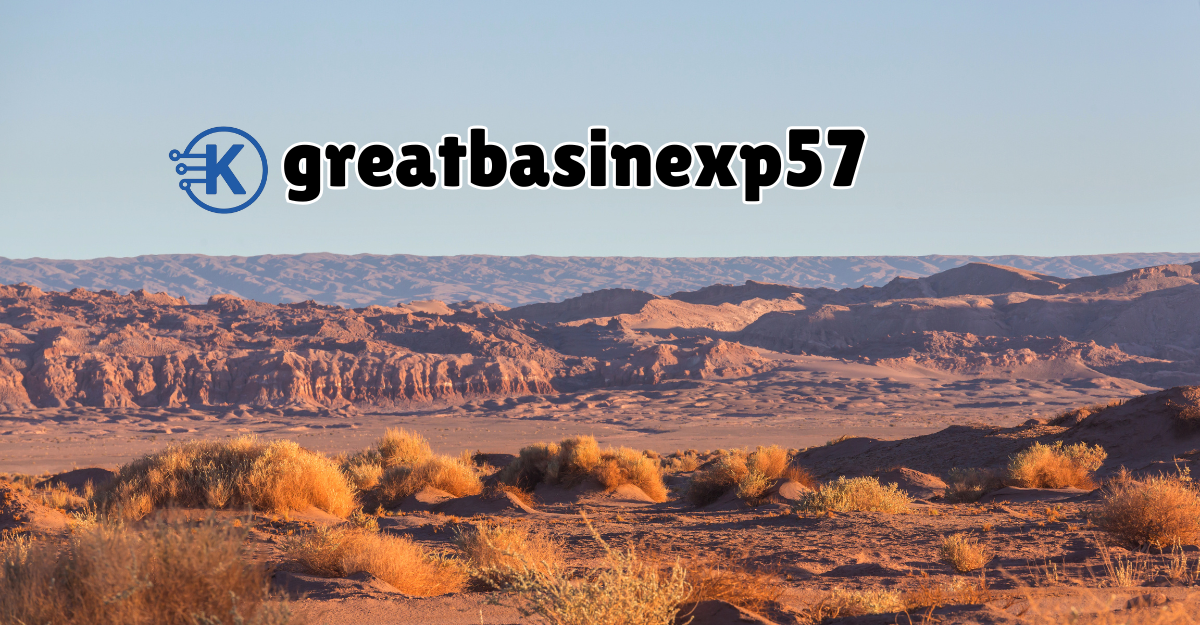
greatbasinexp57 is more than just a cryptic code—it represents a journey, a movement, and a deep exploration of the vast, underappreciated landscapes of the American Great Basin. From the ancient lakebeds of Nevada to the salt flats of Utah, this expedition is a fascinating convergence of history, geology, ecology, and human curiosity. Whether you’re a nature enthusiast, history buff, adventure seeker, or digital nomad, greatbasinexp57 captures an extraordinary story of discovery in North America’s high desert heartland.
In this comprehensive article, we’ll explore the untold story of greatbasinexp57, its origins, destinations, scientific significance, and cultural echoes. This isn’t just another travel piece—it’s a chronicle of exploration that seeks to document a forgotten ecosystem, amplify indigenous voices, and rekindle our sense of wonder for Earth’s dry, silent frontiers.
The Origins of greatbasinexp57
Unlike most modern expeditions which are often backed by governments or large institutions, greatbasinexp57 was born out of a decentralized collective of geographers, anthropologists, conservationists, and digital storytellers. In early 2023, this loosely-formed group recognized the urgent need to document and protect the fragile and little-understood ecosystems of the Great Basin before climate change, mining, and over-tourism altered them forever.
The “57” in the name symbolizes the 57 micro-regions within the Great Basin that were targeted for exploration, each with unique geology, plant life, and cultural importance.
This expedition diverged from traditional paths—not only physically, by taking roads less traveled—but also ideologically, blending scientific inquiry with narrative media. The result is a hybrid of field research, documentary-style storytelling, and environmental activism that has since caught the attention of academic institutions and environmental groups across the U.S.
Mapping the Great Basin: A Land Forgotten
The Great Basin is a massive area covering approximately 209,000 square miles, primarily across Nevada but extending into Utah, Oregon, Idaho, and California. It’s defined not by political boundaries but by hydrology—a vast endorheic basin where water does not flow outward to the sea.
While the Rockies and the Sierra Nevadas often get the limelight, the Great Basin remains a geological museum that’s millions of years old. It contains:
- Ancient dry lakebeds from the Pleistocene era
- High desert plateaus with alien-like rock formations
- Volcanic remnants, including calderas and lava flows
- Salt flats and ephemeral lakes that reveal Earth’s climatic past
The greatbasinexp57 team developed a layered mapping approach using LIDAR, traditional GPS, and oral histories from local tribes to document the land in a never-before-seen way.
The Unseen Biodiversity of the High Desert
Contrary to the assumption that deserts are lifeless, the Great Basin is home to an astonishing range of species. The greatbasinexp57 expedition cataloged over 1,200 species, many of which are endemic, meaning they exist nowhere else in the world.
From the rare pupfish surviving in isolated desert springs, to the resilient bristlecone pine trees—some of the oldest living organisms on Earth—this region is a biological treasure chest.
The team utilized bioacoustic monitoring stations to capture the sonic footprint of the ecosystem, helping scientists study nocturnal species and insect populations through sound. These findings contribute to climate science, conservation efforts, and even AI-based biodiversity modeling.
Cultural Echoes: Native Histories and Modern Resilience
One of the most revolutionary aspects of greatbasinexp57 was its partnership with indigenous communities, particularly the Western Shoshone, Paiute, and Goshute tribes.
Through oral storytelling, ceremonial participation, and digital archiving, the expedition has helped document and preserve vital elements of indigenous heritage, many of which are at risk of disappearing.
Unlike exploitative or extractive models of exploration, greatbasinexp57 took a collaborative approach, often deferring to local tribal historians as the primary narrators of their own lands.
This shift toward ethical storytelling marks a new paradigm in exploration journalism—one that respects sovereignty, values diverse knowledge systems, and decolonizes traditional fieldwork.
Technology Meets Wilderness: A Digital Diary of Discovery
A defining characteristic of greatbasinexp57 was its innovative use of technology to enhance—not replace—the raw experience of exploration.
- Drone photogrammetry allowed for high-resolution topographic mapping
- Augmented reality field guides enabled on-site identification of flora and fauna
- Satellite Internet rigs provided real-time updates from deep within remote valleys
- Blockchain certification ensured the authenticity and provenance of geo-tagged discoveries
This was not just about documenting the land but about making the land accessible digitally, especially for classrooms, researchers, and activists who might never set foot in the Basin.
Their data sets have since been made open-source, and are now being used by universities, conservation programs, and artists around the world.
Not Just a Trip—A Movement
What started as a journey through barren valleys has become a movement that challenges modern exploration paradigms. greatbasinexp57 is not merely about where you go, but how you go there—and who you bring with you in the process.
It embodies values such as:
- Slow travel and minimal ecological impact
- Co-creation with indigenous voices
- Open data and democratized knowledge
- Mental health and solitude in vast landscapes
The expedition has inspired similar micro-expeditions across the Southwest and is now serving as a template for responsible exploration in other fragile zones.
The Visual Language of Silence
The visuals captured by the greatbasinexp57 crew redefine desert photography. Eschewing filters and saturation, they chose a raw, documentary style that honors the stark elegance of the high desert.
Their visual archive contains:
- Time-lapse sequences of lunar shadows crossing the salt pans
- Macro photography of crystalline salt structures forming on playa surfaces
- Drone views of migratory birds navigating through ancient dry lakebeds
This visual diary does more than appeal to the eye—it serves as a climate time capsule for future generations.
Education Reimagined: From Deserts to Digital Classrooms
A lesser-known yet profound impact of greatbasinexp57 lies in its education outreach. Through virtual reality field trips, AI-guided lesson plans, and immersive 3D environments, the expedition is now part of curriculums in over 300 schools across North America.
Students can explore the Great Basin via:
- Interactive 3D models of cave petroglyphs
- AI-interpreted simulations of climate shifts over 10,000 years
- Gamified environmental labs that challenge users to balance ecological decisions in the region
This makes greatbasinexp57 not only an exploration of space but also of time, pedagogy, and our collective imagination.
The Hidden Philosophy Behind greatbasinexp57
At its heart, greatbasinexp57 is a philosophical journey—a meditation on emptiness, endurance, and silence. In an age of noise and speed, the Great Basin offers a paradox: the more empty it seems, the more it has to offer.
Explorers on the trip reported altered mental states, increased mindfulness, and a deepened sense of ecological grief. It became not just a project, but a pilgrimage—one that asks us to confront what we’ve lost, what we’re losing, and what’s still left to save.
Looking Ahead: The Legacy of greatbasinexp57
The core team behind greatbasinexp57 is already planning follow-up missions, including:
- Winter-specific studies on how snowpack trends affect spring biodiversity
- Volcanic core samplings to map seismic history
- Rewilding collaborations with conservation NGOs to protect rare species corridors
They are also working with documentary filmmakers to produce a six-part series, and with literary journals to publish a special edition featuring poetry and essays from the field.
The hashtag #greatbasinexp57 now trends periodically, not just among outdoor enthusiasts but among writers, educators, and climate activists.
Final Thoughts: Why greatbasinexp57 Matters Now More Than Ever
In a time when exploration often means commodification and spectacle, greatbasinexp57 reminds us that true discovery requires humility, patience, and respect. It redefines what it means to explore—not just new places, but new ways of seeing.
Whether you are interested in conservation, history, technology, indigenous rights, or simply the beauty of Earth’s remote corners, greatbasinexp57 is a landmark project that deserves attention and emulation.
As climate change continues to reshape our world, expeditions like this one become more than mere adventures. They become urgent acts of memory—attempts to record what is beautiful before it is lost, and to spark the hope that it might still be saved.
For more information visite the website