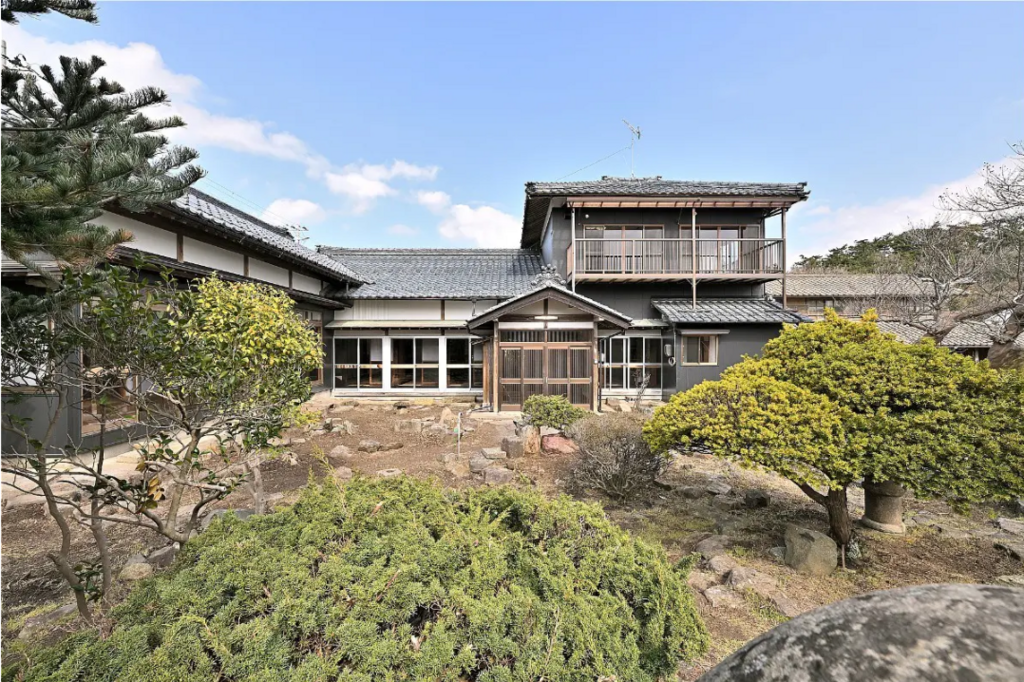
There is a particular kind of silence inside a well-preserved Japanese farmhouse. Not the absence of sound exactly, but something more deliberate—a quiet that feels designed, as though the building itself was constructed around stillness. Thick earthen walls, heavy thatched roofing, wooden beams darkened by centuries of hearth smoke, and paper screens that soften whatever light filters through. It’s an architecture that asks you to slow down.
For a growing number of buyers—from Japan and increasingly from abroad—that experience is precisely the point. Interest in traditional houses for sale in Japan has risen sharply over the past decade, driven by a confluence of factors: remote work liberation, a cultural backlash against sterile modern construction, rising awareness of Japan’s akiya (vacant home) crisis, and, frankly, prices that can seem almost implausibly low compared to equivalent character properties in Europe or the United Kingdom.
This is a market with genuine complexity and genuine reward. Here’s what you need to know before you start looking.
The Architecture You’re Buying Into
Japan’s traditional residential architecture encompasses several distinct building types, each with its own character, construction logic, and maintenance demands.
Machiya
The townhouses of Japan’s merchant class—long, narrow wooden structures built along the commercial streets of cities like Kyoto, Kanazawa, and Takayama. The classic machiya follows a distinctive layout: a street-facing shop front, living quarters stretching back through successive rooms, and an interior garden (tsuboniwa) that draws light and air deep into the building. The proportions are intimate, the craftsmanship meticulous, and the atmosphere—particularly in Kyoto’s preserved historic districts—genuinely irreplaceable.
Minka
Rural farmhouses were built to house both families and livestock under one extended roof. The most dramatic variety, gassho-zukuri, found in the mountainous regions of Gifu and Toyama, features steeply pitched thatched roofs designed to shed the area’s legendary snowfall. These are substantial buildings—often three or four storeys under the roof—with vast interior spaces that feel nothing like conventional Japanese domestic architecture.
Kominka
A broader term often used to describe any old-style Japanese farmhouse or traditional rural dwelling, typically over fifty years old. These properties form the bulk of what appears on the traditional housing market and encompass an enormous range of conditions, sizes, and locations.
Each of these building types represents a fundamentally different relationship with space, light, and the natural world than contemporary construction. They were built with materials sourced locally, by craftsmen using joinery techniques refined over centuries, with an understanding of climate and landscape that modern architecture rarely matches.
The Akiya Opportunity
To understand why traditional Japanese homes are available at the prices they are, you need to understand the akiya phenomenon.
Japan’s population has been declining since 2011. Rural and semi-rural regions have been hollowing out for decades as younger generations migrate to cities. The result is an extraordinary number of vacant homes—government estimates suggest there are now over nine million akiya across Japan, a figure that grows each year.
Many of these properties are traditional homes that have been sitting empty since their elderly owners passed away or moved into care. Heirs who live in Tokyo or Osaka have little use for a farmhouse in rural Gifu. Maintenance costs, inheritance tax complications, and the difficulty of selling in depressed regional markets have led many families to simply leave these properties sitting vacant.
For buyers willing to invest in restoration, the pricing can be remarkable. Akiya in rural prefectures are sometimes listed for as little as a few million yen—equivalent to tens of thousands of pounds—though the condition of these properties varies enormously. In more desirable locations—the outskirts of Kyoto, the historic towns of Nagano, the ski regions of Hokkaido—prices are considerably higher, and competition has been intensifying.
What Restoration Involves
This is where enthusiasm must be tempered with realism. Traditional Japanese homes are extraordinary to live in when properly restored—and genuinely demanding to bring back from a state of neglect.
Thatched roofs (kayabuki) are the most striking and the most maintenance-intensive element of rural traditional homes. Full re-thatching is expensive, labour-intensive, and must be carried out by specialists whose numbers are dwindling. Some owners choose to replace thatch with metal roofing—more practical, less romantically correct, but far cheaper to maintain long-term.
Earthen floors (tataki or doma), wooden structural elements, and traditional plasterwork all require specialist knowledge to repair properly. A general contractor unfamiliar with traditional construction methods can do significant damage to a historic property through well-intentioned but inappropriate interventions. Finding craftsmen who understand and respect the original building methods is crucial—and in some regions, genuinely difficult.
Seismic compliance is a non-negotiable consideration. Japan’s building codes were substantially updated in 1981 and again in 2000. Many traditional homes predate these standards and will require structural assessment and, in many cases, reinforcement. This is not a reason to walk away—it’s a standard part of the due diligence process—but the costs must be factored into any purchase budget.
Plumbing, electrical, and insulation upgrades are almost always necessary in properties that have been vacant for years, and the degree of intervention required varies enormously from property to property.
A realistic budget for restoring a traditional rural home to comfortable habitation typically starts at ¥5–10 million for a modest property in reasonable structural condition, and can reach several times that for larger properties or those requiring extensive work.
In addition to structural restoration, furnishing these grand heritage spaces often presents unique logistical hurdles, such as hiring a specialized Piano Moving Company to carefully transport delicate, heavy family heirlooms into traditional timber buildings without damaging delicate woodwork.
Who Is Buying and Why
The profile of buyers in this market has changed noticeably in recent years.
Japanese buyers—often urban professionals seeking a weekend retreat or a slower lifestyle—have long made up the core of the traditional home market. But international buyers have become a meaningful and growing segment, drawn by the combination of Japan’s open foreign ownership laws, the relative affordability of character properties compared to European equivalents, and a genuine fascination with Japanese aesthetic culture.
Remote working has accelerated this shift. A restored machiya in the outskirts of Kyoto, equipped with fast fibre internet, is a viable full-time base for a designer, writer, software developer, or consultant who is no longer tied to a specific office. The fantasy of living inside a piece of living Japanese history has, for many people, become logistically achievable in a way it simply wasn’t five years ago.
Several Japanese local governments have actively encouraged this trend, establishing akiya banks—registries of vacant properties—and in some cases offering renovation grants or even properties at nominal cost to buyers who commit to restoring and inhabiting them. The terms vary by municipality, and not all programmes are open to foreign buyers, but the direction of travel is clearly toward greater accessibility.
Approaching the Market
The traditional Japanese home market rewards patience, thorough due diligence, and a willingness to engage deeply with the process. Unlike buying a new-build apartment, you are acquiring something irreplaceable—a building that cannot be replicated, in a condition that must be carefully understood before commitment.
Working with professionals who specialise in this category of property is essential. The combination of old building stock, regional market knowledge, renovation network access, and—for international buyers—language and legal navigation is not something a generalist agency can reliably provide.
Japan’s traditional homes are not for every buyer. They demand investment of time, money, and genuine care. But for those who find themselves drawn to the idea of living inside a piece of Japanese history—waking to the sound of a garden water feature, sliding back shoji screens to let in morning light, tending a courtyard that has been cultivated for generations—there is nothing quite like them anywhere in the world.