When it comes to the rich tapestry of global cuisines, few dishes have a history as captivating as kouskousi. Originating from the Mediterranean and North Africa, this flavorful dish has evolved over centuries, maintaining its importance in the daily life of many cultures. The name kouskousi might be unfamiliar to some, but its essence is known across the globe as couscous. This dish isn’t just about its taste—it’s about the traditions, the cultural significance, and the unique preparation methods that make it a timeless staple.
Origins of Kouskousi: A Journey Through Time
The roots of kouskousi stretch back to ancient times, where it is believed to have originated with the Berbers of North Africa, specifically in regions that now comprise Algeria, Morocco, Tunisia, and Libya. The history of kouskousi is intertwined with the social and agricultural history of the region, as its creation was born from the necessity of preparing a food that could withstand the harsh conditions of the desert and provide essential nutrients to nomadic communities.
Traditionally, kouskousi was made using durum wheat, a hardy grain that could be harvested and stored for long periods. It was steamed to create a light, fluffy texture, often paired with meat, vegetables, and legumes, all simmered in rich, aromatic spices. Over time, the dish spread across the Mediterranean, gaining popularity in Spain, France, and Italy, with each region adding its unique twist to the recipe.
The Ingredients that Make Kouskousi Stand Out
At first glance, kouskousi might seem like a simple dish, but its beauty lies in the combination of simple ingredients that come together to create something truly extraordinary.
- Semolina: The base of kouskousi is semolina, a coarse flour made from durum wheat. This ingredient forms the crux of the dish, and its quality determines the final texture. High-quality semolina is essential to making light, fluffy kouskousi, where each grain is distinct and separate.
- Spices and Aromatics: The key to elevating the flavors of kouskousi lies in the careful use of spices. Cumin, coriander, paprika, saffron, and cinnamon are often used to flavor the dish, infusing it with a fragrant, warming aroma. The spices used may vary by region, but the balance of heat and fragrance is crucial.
- Olive Oil: Olive oil, a staple of Mediterranean cuisine, is frequently drizzled over kouskousi before serving, adding richness and enhancing its flavor profile. It also helps in making the couscous grains separate and non-stick.
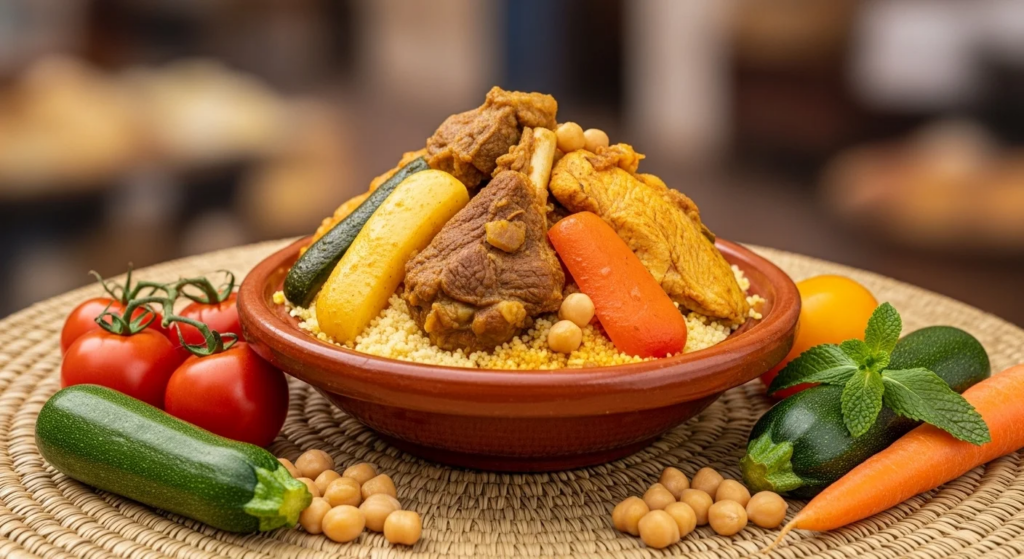
- Vegetables: A variety of vegetables, from carrots and zucchini to onions and tomatoes, are often incorporated into the dish, providing color, texture, and flavor.
- Meat or Legumes: Depending on the region and the occasion, kouskousi can include lamb, chicken, or beef. For a vegetarian version, chickpeas and lentils serve as protein-rich alternatives. The meat or legumes are typically simmered in a rich broth, infusing the couscous with deep, savory flavors.
- Herbs: Fresh herbs such as cilantro and parsley are often sprinkled over the dish just before serving, adding a burst of freshness that balances the earthiness of the spices.
The Art of Preparing Kouskousi
Cooking kouskousi is an art form that requires patience, precision, and a love for the dish’s cultural significance. Traditionally, the couscous is steamed rather than boiled, a method that preserves its delicate texture. This process, though time-consuming, results in couscous grains that are fluffy and perfectly cooked.
- Steaming the Couscous: The process begins with the semolina being moistened and then steamed. The couscous is placed in a special pot known as a couscoussier, which has two levels: one for steaming the couscous and the other for simmering the meat and vegetables. The steam rises through the top level, gently cooking the couscous, allowing it to expand and absorb the aromas from the simmering broth below.
- Layering Flavors: Once the couscous is steamed, it is often fluffed and returned to the steam for a second round, a process known as re-steaming. This ensures that the grains are light and airy, preventing them from becoming clumpy. The couscous is then mixed with olive oil and a pinch of salt, absorbing the rich flavors of the broth in which the meat and vegetables were cooked.
- Serving the Dish: Once everything is prepared, kouskousi is traditionally served in a large, communal bowl. The couscous forms the base, and the meat, vegetables, and broth are arranged on top. A rich, flavorful sauce made from the cooking liquids is often poured over the top to further enhance the taste and moisture.
Variations of Kouskousi Across Regions
The beauty of kouskousi lies in its versatility. While the base ingredients remain largely the same, regional variations exist that highlight local preferences and available resources.
- Moroccan Kouskousi: Known for its rich flavors, Moroccan kouskousi often incorporates lamb, chicken, and a mix of dried fruits such as raisins or apricots. The use of saffron and cinnamon gives it a distinct sweet and savory profile. Moroccan kouskousi is typically served during festive occasions and family gatherings.
- Algerian Kouskousi: In Algeria, kouskousi tends to be heartier and more rustic. It is often paired with lamb and vegetables, and the use of chickpeas is very common. The broth in Algerian kouskousi is thick and full of spices, offering a more robust flavor.
- Tunisian Kouskousi: Tunisian kouskousi is known for its spiciness. Chili peppers, harissa (a spicy paste), and garlic are frequently added to the broth, giving the dish an exciting kick. Tunisian kouskousi can also be served with fish, making it unique from its counterparts in other regions.
- Libyan Kouskousi: Libyan kouskousi often features lamb or beef and incorporates vegetables like carrots, zucchini, and potatoes. It is typically served with a side of doukka, a spice blend made of sesame seeds, coriander, and cumin, which is sprinkled over the couscous just before eating.
- French Kouskousi: In France, particularly in the southern regions, kouskousi has taken on a more Mediterranean flair. It is often paired with seafood, and the vegetables are sautéed to bring out their sweetness. The French version of the dish is often served with a light broth, allowing the flavors to shine without being overwhelming.
The Health Benefits of Kouskousi
While kouskousi is often seen as a celebratory dish, it is also a nourishing and balanced meal. The combination of semolina, vegetables, and meat or legumes provides a good source of complex carbohydrates, protein, and fiber.
- Protein-Rich: With the inclusion of meat, legumes, or both, kouskousi offers a substantial amount of protein, essential for muscle repair and growth.
- High in Fiber: The vegetables and legumes in kouskousi contribute to its high fiber content, promoting digestive health and helping to keep the body full for longer periods.
- Rich in Antioxidants: Spices such as cumin, coriander, and paprika are packed with antioxidants, which help protect the body against free radicals and inflammation.
- Heart-Healthy Fats: Olive oil, a key ingredient in kouskousi, is rich in monounsaturated fats, which are known to support heart health by reducing bad cholesterol levels.
The Cultural Importance of Kouskousi
Beyond its nutritional benefits, kouskousi holds great cultural significance in the regions where it is made. In many North African and Mediterranean cultures, it is not just a dish—it’s a symbol of community and hospitality.
- A Symbol of Generosity: Kouskousi is often prepared for large gatherings and celebrations. Its communal nature, served in a large pot to be shared by all, symbolizes the importance of togetherness and generosity.
- A Tradition Passed Down Through Generations: The preparation of kouskousi is a time-honored tradition, often passed down from one generation to the next. Families have their own unique ways of preparing the dish, with recipes evolving over time but still maintaining the core elements that make kouskousi so special.
- Festive Occasions: In many cultures, kouskousi is associated with holidays and religious celebrations. It is a dish often served during religious feasts like Eid, weddings, and other important family milestones, making it a central part of the social fabric.
Conclusion
Kouskousi is more than just a dish; it is a celebration of history, culture, and the power of food to bring people together. Whether you encounter it in Morocco, Tunisia, or France, the rich flavors, aromatic spices, and sense of community it embodies remain constant. With its versatile variations, rich nutritional profile, and deep cultural roots, kouskousi continues to be a beloved and enduring dish enjoyed by many around the world.